Gongan Ontological Enquiry Framework
Creates a structure for understanding cultural and spiritual context, place, story, ways of knowing, values and ethics.
The Gongan Cultural and Spiritual Paradigm helps different perspectives meet through a relational approach.
Commercial goals, viability and industry standards.
Policy, programs, compliance and measured outcomes.
Culture, Country, relationships and long-term benefit.
Research, education and training require a relational approach.
Rod Williams developed the Gongan Cultural and Spiritual Paradigm, which includes the Gongan Ontological Enquiry Framework, the Gongan Business Model Canvas and the Gulgan Jagun (Risk) Analysis Framework.
Recognise the cultural, spiritual, social, economic and organisational factors that shape the project.
Bring Indigenous Knowledge and Western management into a clear and respectful conversation.
Use deep listening, respectful engagement and shared responsibility to guide decisions.
Move from isolated tasks and assumptions to a wider view of relationships, risks and long-term outcomes.
Each framework supports a different part of the conversation while keeping cultural and spiritual context visible in business, project and risk decisions.
Creates a structure for understanding cultural and spiritual context, place, story, ways of knowing, values and ethics.
Connects cultural and economic foundations with corporate planning and Indigenous business development.
Brings outcomes, barriers, protocols, participation, equity, ownership and different forms of wealth into project analysis.
The updated diagram brings the Gongan Ontological Enquiry Framework, Gongan Business Model Canvas and Gulgan Jagun Analysis Framework together.
About the Gongan Business Model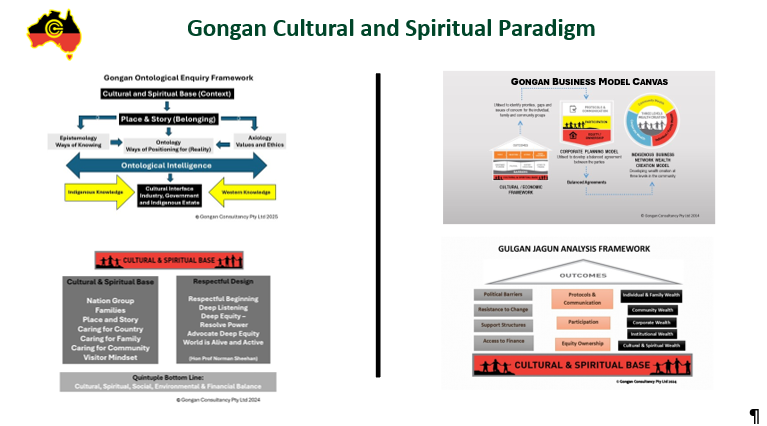
Visit Supply Nation to learn more about Australia’s Indigenous business network and supplier community.

The paradigm shift is a shift from transactional and individualistic ways of thinking to a relational model grounded in connection, reciprocity, and shared responsibility. Within the Gongan Cultural and Spiritual Paradigm, relationships with people, Country, culture, spirituality, and future generations become the foundation for leadership, governance, and decision-making, recognising that sustainable outcomes emerge through respectful relationships rather than isolated actions.